Information for Diabetics
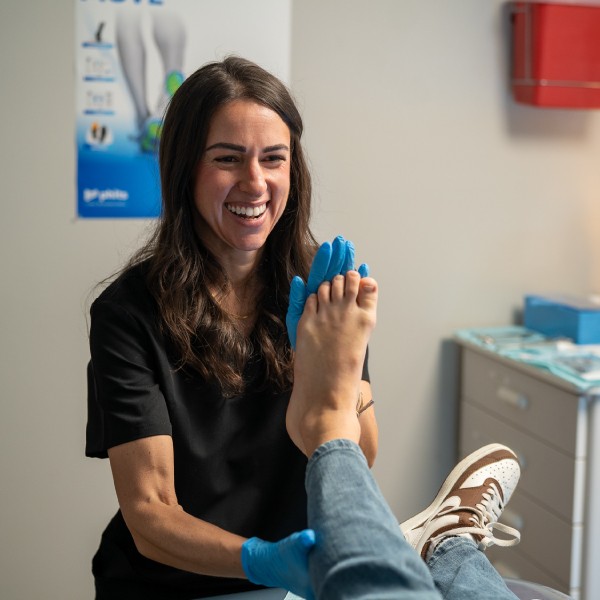
For patients living with diabetes, foot health is not optional, it is a critical component of overall disease management. Poorly controlled blood glucose accelerates nerve damage (peripheral neuropathy) and reduces circulation to the lower extremities, creating conditions where even a minor cut, blister, or pressure sore can quickly escalate into a life-threatening wound.
Maintaining a Hemoglobin A1C below 7.0 is the single most important step in preventing diabetes-related foot complications. However, even well-managed diabetics face significant risk:
1 in 6 diabetics will develop a diabetic foot ulcer in their lifetime
Patients with a prior ulcer history face a significantly elevated risk of recurrence
Untreated ulcers can progress from infection to osteomyelitis (bone infection), gangrene, and in worst-case scenarios — amputation
Early, proactive care from a specialized podiatrist is the most effective strategy for protecting your feet, preserving limb function, and avoiding hospitalization. If you have an active ulcer, a history of ulceration, diabetic neuropathy, or circulatory concerns, The Foot & Ankle Group provides the highest level of diabetic foot care available in South Jersey and Northeast Philadelphia.
Regional Leaders in Diabetic Foot & Wound Care
The Foot & Ankle Group is the premier diabetic foot care practice serving South Jersey and Northeast Philadelphia. Our board-certified podiatric surgeons are the primary consultant specialists called in to evaluate and treat complex foot, ankle, and leg infections across 5 regional hospital systems including facilities throughout Burlington County, Camden County, and the greater Philadelphia corridor.
Our physicians manage the full spectrum of diabetic foot complications, from early-stage neuropathy and preventive care through advanced wound debridement, infection management, limb salvage surgery, and Charcot foot reconstruction. We follow ADA-compliant diabetic foot screening protocols and employ advanced wound care modalities including:
Advanced wound debridement — Removing necrotic tissue to promote healing
Bioengineered skin substitutes — Accelerating wound closure for chronic ulcers
Negative pressure wound therapy — Promoting tissue regeneration in complex wounds
Total contact casting — Offloading pressure to allow ulcer healing
Hyperbaric oxygen therapy referrals — For wounds requiring enhanced oxygenation
Vascular assessment and optimization — Coordinating care with vascular surgery when circulation is compromised
Custom diabetic accommodative orthotics — Protecting vulnerable pressure points and preventing ulcer recurrence
World-Class Wound Care Leadership
The physicians of The Foot & Ankle Group hold leadership positions at two of the region's most respected wound healing centers, a distinction that reflects their national standing in diabetic foot care:
Dr. Maureen Clinch, DPM — Medical Director, Virtua Wound Healing Center, Mt. Holly, NJ
Dr. Michael B. Miller, DPM — Lead Podiatrist, Jefferson Northeast Wound Healing Center, Philadelphia, PA
Collectively, our physicians bring over 100 combined years of wound center experience to every patient encounter. Drs. Clinch, Miller, Dougherty, and Shinder have trained leading diabetic foot specialists across the country and the techniques they have pioneered continue to shape best practices in podiatric wound care nationwide.
Dr. Miller holds the additional distinction of being the only fellowship-trained nerve surgeon (AENS Fellow) in the Philadelphia and South Jersey region, providing unmatched expertise for diabetic patients with peripheral neuropathy, nerve-related foot complications, and tarsal tunnel syndrome, conditions that frequently co-occur with diabetic foot disease.
Warning Signs Every Diabetic Patient Should Know
Diabetic peripheral neuropathy reduces sensation in the feet, meaning serious wounds can develop without any pain. All diabetic patients should inspect their feet daily and seek immediate podiatric evaluation if they notice any of the following:
A sore, blister, cut, or wound that is slow to heal or not healing
Redness, warmth, swelling, or discharge around a wound
Skin discoloration — pale, blue, or darkening tissue
New or worsening numbness, tingling, or burning in the feet
A callus, corn, or thickened skin area that returns repeatedly
Changes in foot shape, particularly a Charcot deformity (rocker-bottom foot)
Any odor coming from the foot or shoe
Do not wait. Diabetic foot complications can progress from manageable to limb-threatening within days. Contact The Foot & Ankle Group at the first sign of a problem.
Does Medicare Cover Diabetic Foot Care?
Yes. Medicare Part B covers diabetes-related foot care for eligible patients. Coverage includes foot exams and treatment such as foot ulcer care, callus treatment, and toenail management every 6 months for patients with diabetic peripheral neuropathy and loss of protective sensation. After meeting the Part B deductible, patients typically pay 20% of the Medicare-approved amount for medically necessary treatment.
Medicare also covers therapeutic diabetic footwear (shoes and inserts) for patients who meet qualifying criteria, including a history of foot ulceration, peripheral neuropathy with callus formation, foot deformity, poor circulation, or prior amputation.
The Foot & Ankle Group accepts Medicare and works with patients across Mount Laurel, Columbus, Bordentown, NJ and Philadelphia, PA to ensure they receive the full scope of covered diabetic foot care. Contact our office to confirm your coverage and schedule your diabetic foot evaluation.
Frequently Asked Questions About Diabetic Foot Care
What does a podiatrist do for diabetic patients?
A podiatrist specializing in diabetic foot care provides comprehensive evaluations, routine preventive care, wound treatment, infection management, custom orthotics, and when necessary surgical intervention to treat ulcers, infections, Charcot foot, and limb-threatening complications. Regular podiatry visits are a cornerstone of diabetic disease management.
How often should a diabetic see a podiatrist?
Most diabetic patients should see a podiatrist at least once every 3–6 months for routine foot screening, even if no active problems exist. Patients with neuropathy, a history of ulcers, or circulation problems may require more frequent visits. Medicare covers diabetic foot exams every 6 months for eligible patients.
What is a diabetic foot ulcer and how is it treated?
A diabetic foot ulcer is an open wound or sore on the foot that fails to heal normally, most commonly occurring on the bottom of the foot. Treatment depends on severity and may include wound debridement, offloading with total contact casting, bioengineered skin substitutes, infection management, and in advanced cases surgical intervention or limb salvage procedures.
Can diabetic foot problems lead to amputation?
Yes — untreated diabetic foot infections and non-healing ulcers are a leading cause of lower limb amputation in the United States. However, with early intervention, advanced wound care, and proper management of blood glucose and circulation, the vast majority of amputations are preventable. The Foot & Ankle Group specializes in limb salvage surgery to protect patients from this outcome.
What is Charcot foot and how is it treated?
Charcot foot (Charcot neuroarthropathy) is a serious condition in which diabetes-related nerve damage causes progressive weakening and fracturing of the bones in the foot, eventually leading to a rocker-bottom deformity if untreated. It is treated with offloading, immobilization, and in advanced cases surgical reconstruction. Early diagnosis is critical to prevent permanent deformity.
Does The Foot & Ankle Group accept Medicare for diabetic foot care?
Yes. The Foot & Ankle Group accepts Medicare and treats diabetic patients across Mount Laurel, Columbus, Bordentown, NJ and Philadelphia, PA. Our physicians are experienced in Medicare-covered diabetic foot exams, wound care, therapeutic footwear, and all associated treatment services.